American Association for Women in Community Colleges |

Day of Dialogue
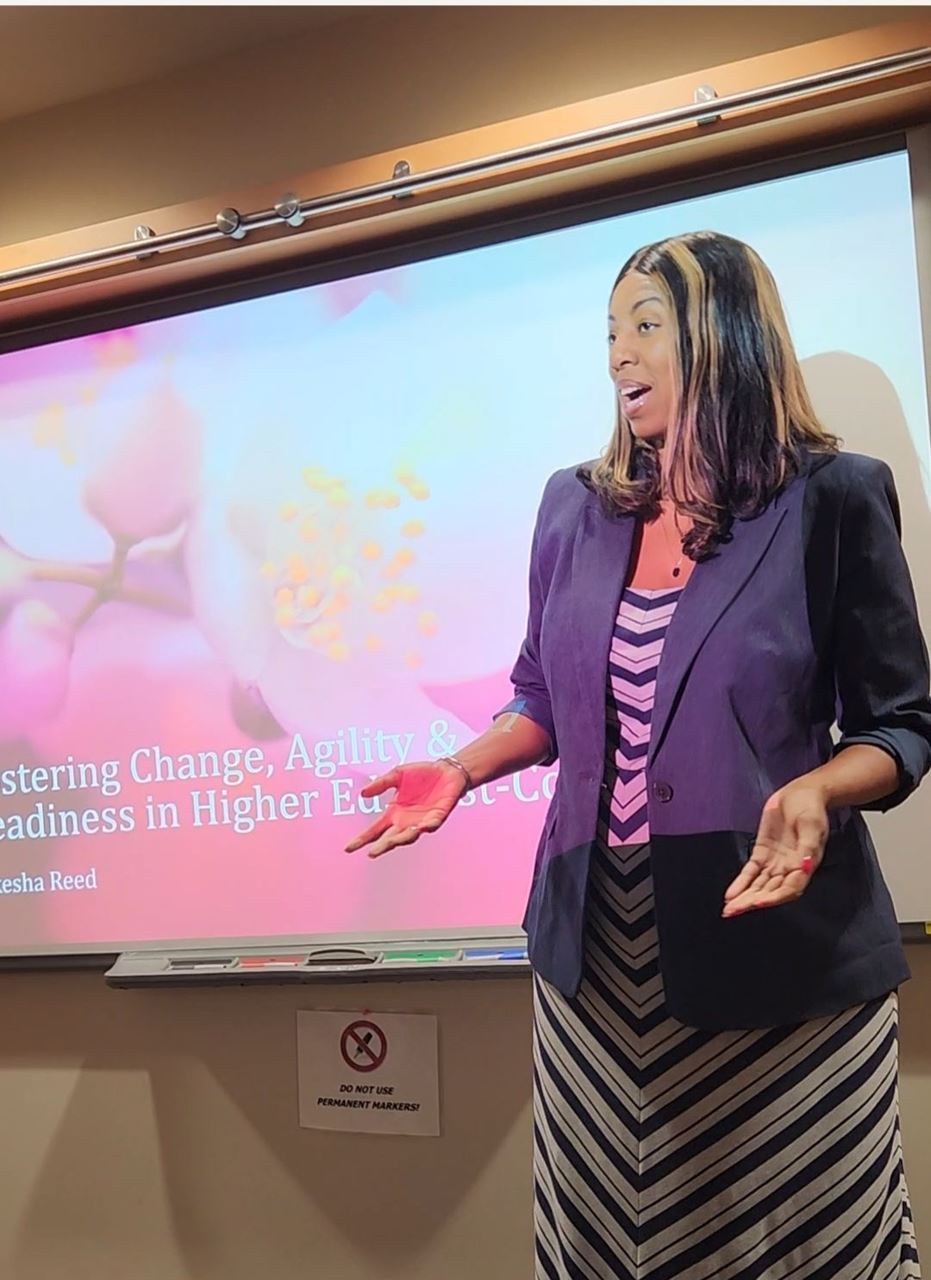
In celebration of Women’s History Month and International Women’s Day, AAWCC organizes its annual Day of Dialogue to encourage chapters to engage in thoughtful conversation about issues impacting women attending and working at community colleges. AAWCC develops a themed topic, along with resources to assist chapters in planning events and discussions. Chapters develop programming to complement the topic.
While called Day of Dialogue, chapter programming takes place throughout the month of March and may also extend into the spring months that follow to best fit campus schedules and local needs.
The theme for 2026 is “Women Leading Resilience by Design in Community Colleges.” This year, AAWCC aligns its National Day of Dialogue with the AACC Resilient by Design framework —highlighting the urgent need for community colleges to adapt amidst shifting student needs, evolving workforce demands, advancing technology, and increasing accountability.
Women across community colleges — students, staff, faculty, and leaders — play a vital role in shaping this future. The Day of Dialogue provides a dedicated space to explore how women contribute to — and lead — resilience, innovation, and change.
How to use the Day of Dialogue guide
The Day of Dialogue guide is intentionally comprehensive so every chapter can find an entry point that fits its campus context. You are not expected to use every section.
- Select 1–2 topic areas that best match your campus priorities, current initiatives, and the women you aim to convene.
- Use the discussion questions to guide conversation and close with 1–2 actionable takeaways (a commitment, recommendation, or partnership idea).
- Choose a format that works locally (e.g., 60–90 minute discussion circle, panel, lunch-and-learn, or a short action lab).
Before you start planning
Before you start planning your Day of Dialogue (or a series of events), take time to research the topic. Our AAWCC 2026 Day of Dialogue Planning Toolkit (PDF) includes the Resilience by Design: The Future of America’s Community College’s report, as well as recommended books, articles, and other resources to inform your planning.
Additional guidance for crafting thoughtful discussion within the chapter and across campuses is also included in the toolkit. Consider these guiding questions as you plan:
- What does “resilience by design” require on your campus — and where are women already leading that work?
- Which 1–2 focus areas are most relevant right now given your campus realities, partnerships, and capacity?
Planning Day of Dialogue events
The planning toolkit also serves as a practical event-planning guide for chapters. Chapters may use in-person, virtual, or hybrid approaches based on local realities.
Examples of formats chapters have used:
- Speakers (keynote speakers or panelists) on campus and/or via webcasting (Zoom, Facebook, Teams, etc.)
- Large group discussions
- Small group discussions
- Book/article read + facilitated dialogue
- Campus listening session leading to an action plan
- Panel discussion with faculty, staff, students, and community partners
- Opening or closing speaker plus discussion sessions throughout the event
Sharing your event with AAWCC and lessons learned
- During your Day of Dialogue, take photos to share on social media using #AAWCC #dayofdialogue (and any chapter/campus tags you choose).
- Email pictures of your event that may be used on the AAWCC website to showcase chapter dialogues.
- Consider submitting your chapter for the AAWCC Model Chapter Award and reporting your Day of Dialogue activities in your chapter’s annual reporting cycle.
The American Association for Women in Community Colleges changes women’s lives through education, service and leadership development. | Email: info@aawccnatl.org AAWCC, P.O. Box 32682 Pikesville, MD 21282-9998 | Official AAWCC Technology Partner |